

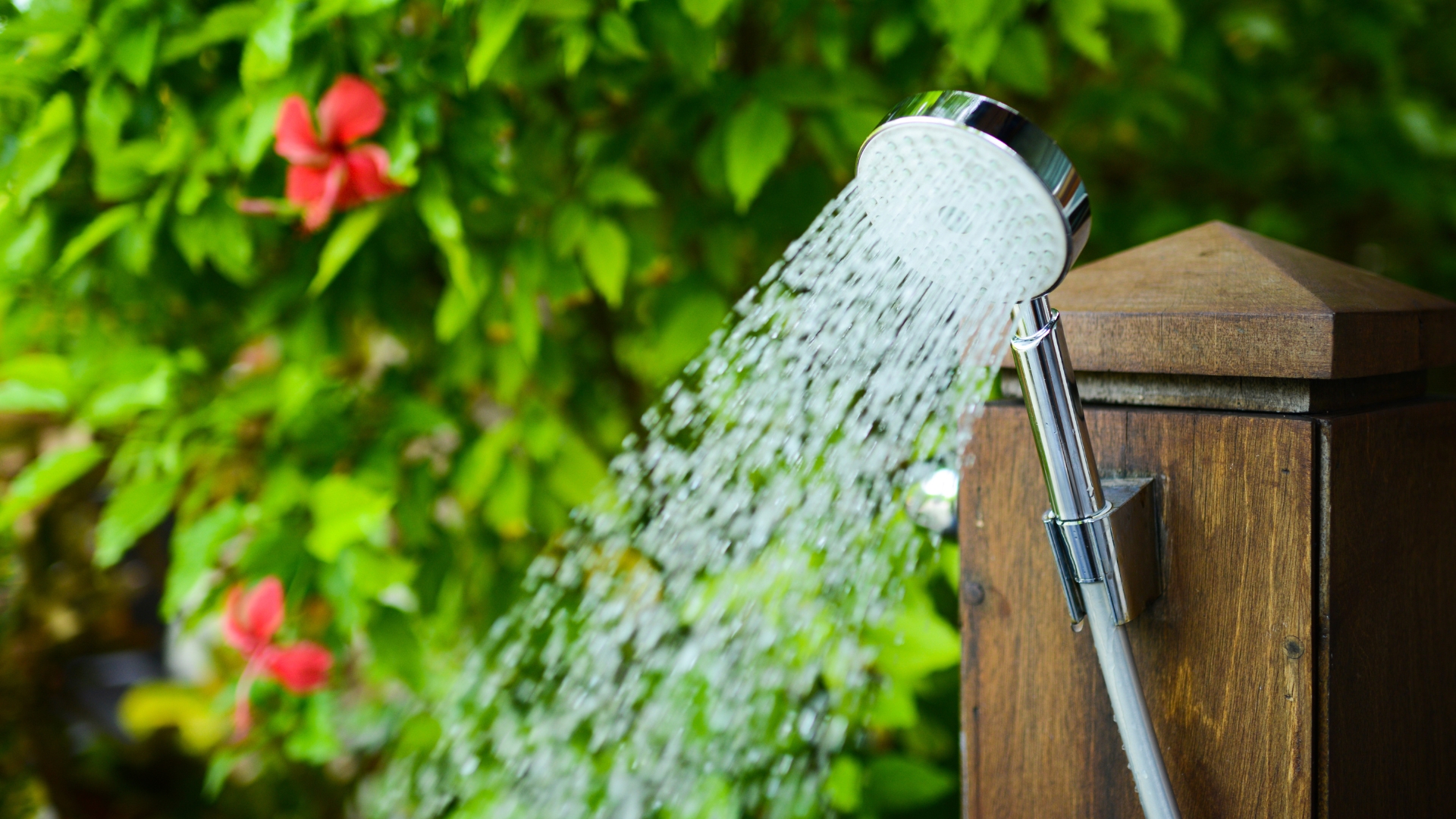
Positioning the shower close to existing plumbing may reduce the amount of additional pipework required, although drainage needs to be considered before deciding on the final location.
If you’re still deciding whether an outdoor shower would suit your home, our article on the benefits of installing an outdoor shower explains some of the everyday advantages.
Do You Need Hot and Cold Water?
A cold-water outdoor shower may be all you need if it’s mainly for rinsing off sand and saltwater after visiting the beach.
However, if you plan to use it for regular showering, washing children or cleaning muddy pets, hot and cold water can make it more comfortable throughout the year.
Connecting hot water may involve additional pipework, particularly if your preferred shower location is some distance from the existing hot water supply.
A licensed plumber can assess the available connections and appropriate temperature controls to help you choose a suitable setup.
Why Outdoor Shower Drainage Needs Careful Planning
Drainage is one of the most important parts of an outdoor shower installation and shouldn’t be left until the end.
Water used for showering, particularly when soap or shampoo is involved, is considered greywater. It shouldn’t simply be directed into stormwater drains or allowed to run onto the street.
Depending on your property’s layout and plumbing, a suitable sewer connection or another compliant wastewater management arrangement may be required.
Sand and debris are also worth considering, particularly if the shower will be used frequently after beach trips. Sand can accumulate in drains and contribute to blockages, so an appropriate drainage design and regular cleaning are important. Our article on common causes of blocked drains in summer explains why sand and other debris can cause drainage problems.
Your plumber should also consider where water will collect, the slope of the surrounding surface and whether additional drainage is needed.
Central Coast Council has requirements for plumbing and drainage work, and inspections or approvals may apply depending on the installation. Properties using on-site wastewater systems may have different considerations.
For more information about installation planning, read our article on plumbing considerations when installing outdoor showers.
Choose Fittings That Can Handle Coastal Conditions
Outdoor showers are exposed to sun, rain and, in coastal locations, salt-laden air. Choosing fittings designed for outdoor use can help reduce corrosion and maintenance problems.
Look for corrosion-resistant tapware and a showerhead that is easy to clean. A handheld attachment can also be useful for rinsing sandy feet, surfboards or pets.
Water efficiency is worth considering too. Central Coast Council’s Water Wise Rules allow outdoor shower use and recommend water-efficient showerheads, although separate water restrictions may apply when introduced.
Choosing a WELS-rated shower head helps you compare water consumption and avoid unnecessary water use.
What to Check Before Installing Your Outdoor Shower
Before arranging an installation, consider:
- Location: Is the shower easy to access, private and reasonably sheltered?
- Water supply: Is cold water sufficient, or would hot and cold water be more practical?
- Drainage: Where will the used water go, particularly if soap or shampoo will be used?
- Fittings: Are the showerhead and tapware suitable for outdoor and coastal exposure?
- Maintenance: Can you easily clean the shower head, remove sand and leaves, and access the fittings if repairs are needed?
Discussing these details with your plumber before purchasing fittings or starting landscaping work can help avoid unnecessary changes during installation.
Planning an Outdoor Shower on the Central Coast?
An outdoor shower can be a practical addition to a coastal home, provided the water supply, positioning and drainage are properly planned.
Wild Water Plumbing provides professional shower and tap installations and offers plumbing services across the Central Coast, including Terrigal, Avoca Beach, Umina Beach and Woy Woy.
Call 0405 692 151 to discuss your outdoor shower plans and arrange a quote.
Frequently Asked Questions
Do I need council approval to install an outdoor shower on the Central Coast?
Not every outdoor shower requires development approval, but plumbing and drainage requirements still apply. Central Coast Council requires inspections for relevant plumbing and drainage work, and additional approvals may be needed depending on the installation. Before starting, have a licensed plumber check what applies to your property, particularly if new drainage connections or building work are involved.
Can I connect an outdoor shower to an existing garden tap?
Some portable outdoor showers can connect to an existing garden tap, but a permanent installation may need additional plumbing. The suitability of the water supply, fittings and backflow protection should be assessed, along with how the shower water will drain. A licensed plumber can advise whether your existing tap connection is appropriate or if a dedicated water supply would be a better option.
How much does it cost to install an outdoor shower on the Central Coast?
The cost depends on the type of shower, available plumbing connections and drainage requirements. A basic cold-water installation near existing plumbing may be less expensive than a hot and cold shower requiring new pipework, drainage or excavation. The choice of fittings, surrounding surfaces and any necessary building work can also affect the price. An on-site assessment is the best way to obtain an accurate quote.
Can outdoor shower water drain directly into the garden?
Not automatically. Although greywater can sometimes be reused for garden irrigation, the method of disposal must be suitable and comply with applicable requirements. Water containing soap, shampoo, salt or other contaminants needs particular consideration. Uncontrolled runoff can create waterlogging or drainage problems and must not be allowed to enter stormwater systems inappropriately. A plumber can assess whether an approved drainage or greywater arrangement is suitable.
Can I install an outdoor shower if my property has a septic system?
Yes, an outdoor shower may be possible on a property with a septic or other on-site wastewater system, provided the existing system can accommodate the additional wastewater and the installation meets applicable requirements. Connecting another shower increases the amount of water the system needs to manage. A plumber should assess the proposed connection, with Council approval required where alterations to the wastewater system need authorisation.
Will I need to upgrade my hot water system to install an outdoor shower?
Not necessarily. Many existing hot water systems may be able to supply an additional shower, depending on their capacity, condition and household water usage. If several showers or taps are used simultaneously, the available hot water may be insufficient. Before considering an upgrade, have your existing system assessed. You can also explore our hot water installation and repair services if changes are needed.
Can an outdoor shower be installed on an existing deck or paved area?
Yes, but the surface and surrounding structure need to be suitable for regular water exposure. The installation must allow water to drain safely without pooling, damaging decking materials or flowing towards the house. Plumbing access, appropriate waterproofing and the condition of the existing surface may also influence the installation. It’s worth checking these details before purchasing fittings or modifying your outdoor area.